Grading That Channels Water Where It Belongs
Grading in Williamstown for properties where seasonal drainage challenges require water management during wet weather months
Northern Kentucky's wet weather months turn poorly graded sites into standing water problems, with spring rains overwhelming flat areas and winter freeze-thaw cycles creating new low spots each season. Ritchey Land Solutions handles grading work across Williamstown, Walton, Dry Ridge, and surrounding communities, creating drainage solutions that move water away from structures and prevent the pooling that leads to foundation issues and unusable yard areas. This registered contractor understands how Northern Kentucky's terrain and seasonal precipitation patterns interact, which determines where water flows once it hits the ground.
Grading involves reshaping the ground surface to create specific slopes and drainage paths, with calculations determining how much fall is needed per linear foot to move water effectively without causing erosion. The work accounts for where water enters the property, where it needs to exit, and what happens during heavy rainfall when volume increases beyond normal conditions.
Request a property evaluation to map current drainage patterns and identify necessary grade adjustments.
How Grading Addresses Northern Kentucky's Drainage Problems
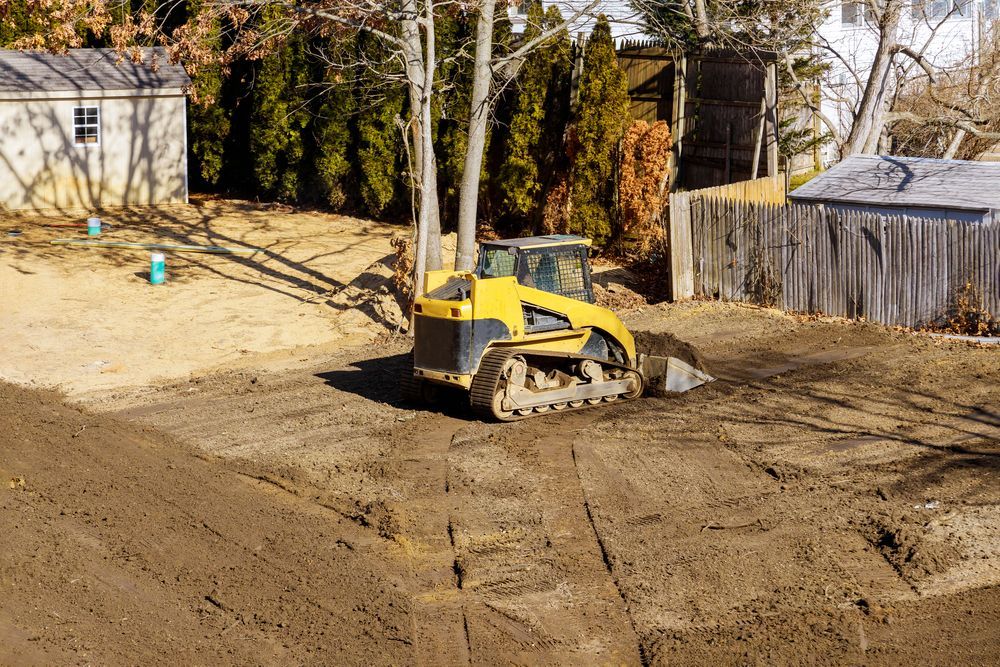
Effective grading creates a surface that directs water along planned routes rather than allowing it to follow the path of least resistance, which often means toward foundations, driveways, or low-lying areas where it pools. The process involves cutting high spots and filling low spots to establish consistent slopes, typically between two and five percent depending on the surface type and how quickly water needs to move.
After grading is complete, you'll see water moving visibly away from structures during rainfall instead of collecting against foundations or creating muddy zones in the yard. The ground maintains its shape through seasonal changes rather than developing new depressions each spring, and previously wet areas dry out faster after storms because water no longer has anywhere to accumulate.
Grading also addresses subsurface water movement when necessary, which involves creating swales or installing drain tile beneath the finished surface to handle water that moves through the soil rather than across it. Properties with clay soil often need this additional drainage layer, since clay doesn't absorb water quickly and instead holds it near the surface where it saturates the ground and creates soft, unstable conditions.
Common Questions About This Service
Grading decisions depend on how water currently behaves on your property and where Northern Kentucky's seasonal rainfall creates problems.
What slope percentage does proper grading require?
Most graded surfaces need a minimum two percent slope away from structures to move water effectively, which translates to a drop of approximately three inches over twelve feet, though steeper slopes may be necessary for areas with heavy water flow or clay soil that sheds water quickly.
How does grading prevent foundation problems in Williamstown?
Water that collects against foundation walls creates hydrostatic pressure that forces moisture through concrete and causes settling as soil becomes saturated, so grading that directs water away eliminates the source of moisture before it reaches the structure.
What happens to existing landscaping during grading?
Grading requires moving soil across the property, which means plants, grass, and existing surface features in the work area are typically removed or relocated before the ground is reshaped, though established trees outside the immediate grading zone can often remain if root zones aren't disturbed.
Why do some graded areas still have drainage problems after work is finished?
Grading that doesn't account for subsurface water movement or that creates slopes too shallow for the soil type will continue to have problems, since water follows the path of least resistance regardless of surface appearance, and clay soil requires steeper grades than sandy soil to achieve the same drainage effectiveness.
When should grading be completed relative to other site work?
Grading typically happens after excavation and utility installation but before final landscaping or hardscaping, since the finished grade determines where surfaces sit and establishes drainage patterns that affect everything built on top of it.
Ritchey Land Solutions provides engineered grading solutions throughout Northern Kentucky with equipment and terrain expertise that solve drainage problems before they start. Reach out at (859) 428-6336 to discuss your property's specific drainage challenges.