Site Prep That Prevents Future Problems
Site preparation in Williamstown for building sites where clay soil compaction and drainage must be addressed before construction begins
Grant County building sites present specific challenges that show up after construction if the preparation phase doesn't account for clay soil behavior and water movement patterns. Site preparation involves clearing vegetation, removing unsuitable material, establishing proper grades, and compacting soil to create a stable base that supports structures and manages drainage throughout the property's lifetime. Ritchey Land Solutions handles comprehensive site prep across Williamstown and Northern Kentucky, operating as a registered and insured contractor with local building site experience that addresses the region's soil and drainage challenges before foundations are poured.
The process includes stripping organic topsoil layers that compress over time, excavating and replacing any unstable fill or loose material, and compacting the remaining soil in controlled lifts to achieve the density needed for structural support. Clay soil requires particular attention during compaction, since it behaves differently depending on moisture content and can become either rock-hard or unstable based on how it's handled during prep.
Arrange a site consultation to evaluate soil conditions and drainage requirements before construction begins.
What Changes After Complete Site Preparation
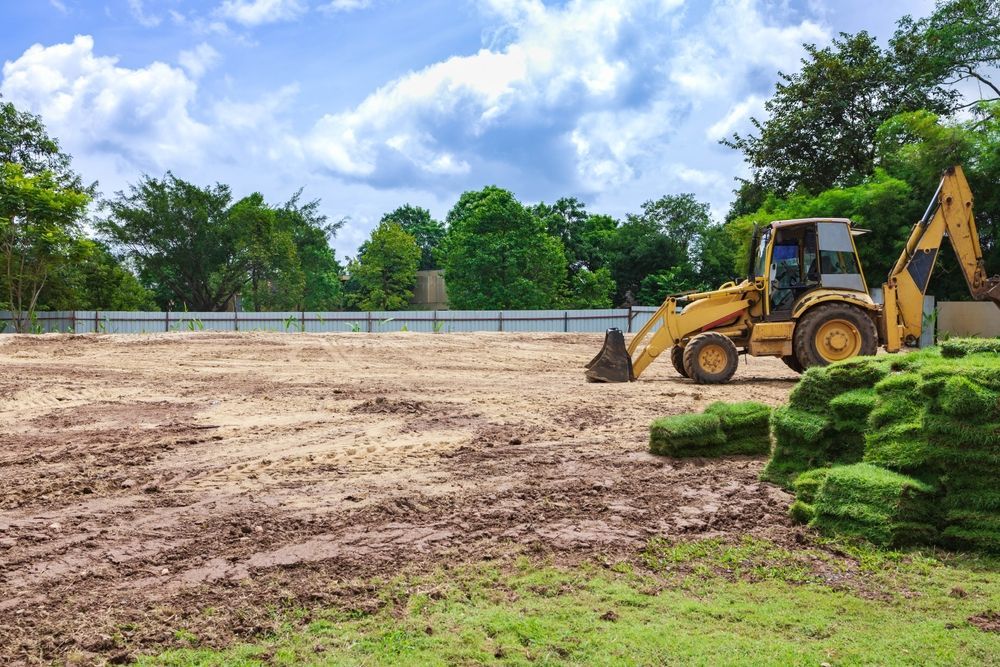
Thorough site preparation transforms raw land into a construction-ready surface with stable soil, established drainage patterns, and grades that direct water away from planned building locations. The work involves testing soil compaction with specific equipment to verify that density meets the standards required for the foundation type, since concrete slabs and footings perform only as well as the ground beneath them allows.
Once site prep is complete, you'll notice the building pad sits level and firm without soft spots or areas that flex under equipment weight, drainage paths channel water to planned exit points rather than toward the foundation area, and the site remains stable through weather changes instead of developing ruts or depressions. The prepared surface also sheds water during rain rather than absorbing it and turning muddy, which indicates proper compaction and drainage design.
Comprehensive site preparation also includes addressing access routes for construction equipment and material delivery, establishing erosion control measures that prevent soil loss during the building phase, and verifying that utility corridors are properly located and graded. Sites that skip any of these steps typically face delays once construction begins, since problems that could have been solved during prep become significantly more expensive to fix after structures are partially built.
Answers to Frequent Service Questions
Site preparation decisions affect every phase of construction that follows, making it critical to understand what the process involves and why certain steps matter in Northern Kentucky's conditions.
What compaction level does building site preparation require?
Building sites typically need soil compacted to at least 95 percent of maximum density as determined by laboratory testing, which is verified on-site using nuclear density gauges or other testing equipment that measures how tightly soil particles are packed together.
How does clay soil affect site preparation timelines in Grant County?
Clay soil must be worked at specific moisture levels to achieve proper compaction, which means wet conditions can halt site prep work until the soil dries enough to handle equipment without creating ruts or failing to compact, while overly dry clay becomes difficult to break up and grade smoothly.
What gets removed during site preparation beyond trees and vegetation?
All organic topsoil must be stripped and stockpiled or removed, since organic material continues to decompose and compress for years after burial, and any existing fill material, debris, or unstable soil layers need to come out and be replaced with engineered fill that's placed and compacted in controlled lifts.
Why does drainage matter during site prep rather than after construction?
Drainage patterns established during site prep determine where water flows across the entire property, and correcting drainage problems after structures are built requires working around foundations, utilities, and landscaping, which makes simple grading adjustments turn into complex and expensive projects.
When is site preparation considered complete and ready for foundation work?
The site is ready when all unsuitable material has been removed, engineered fill has been placed and compacted to specification, final grades have been established and verified, drainage systems are functional, and testing confirms that soil density meets the requirements for the planned foundation type.
Ritchey Land Solutions provides complete professional site preparation throughout Northern Kentucky with the local building site experience needed to prevent foundation and drainage problems down the road. Call (859) 428-6336 to discuss your upcoming construction project and schedule site evaluation.